

Blog & News
Gas Pressure Switches: operation, types and integration in Industrial Systems
What are Gas Pressure Switches and what are They used for
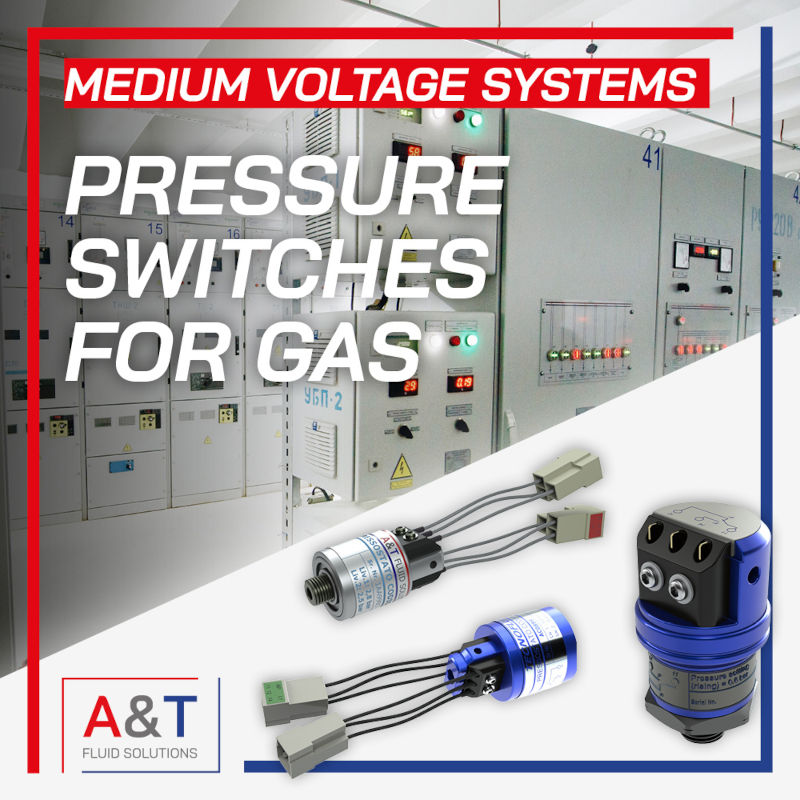
A gas pressure switch is a control device that detects the pressure of a gas within a closed system and generates an electrical signal—typically the opening or closing of a contact—when the pressure reaches one or more predefined threshold values.
Unlike a pressure transducer, which provides a continuous analog signal, the pressure switch operates in a discrete manner: the output is binary, making it particularly suitable for managing alarms, start/stop commands, and safety interlocks without the need to interpret the output signal.
Monitoring gas pressure in industrial environments is not limited to simply verifying that the system operates within nominal operating limits.
In many applications, a pressure variation is the first detectable sign of an anomaly—a leak, a blockage, a valve failure—and the timeliness of detection is directly correlated with the ability to intervene before the issue results in system downtime or, worse, a safety risk.
How a Gas Pressure Switch works
The operating principle is based on the mechanical deformation of a sensing element—typically a diaphragm or a bellows—under the effect of gas pressure.
When the applied pressure reaches the setpoint value, the sensing element activates a switching mechanism that generates the output signal. As the pressure decreases, the system resets, with a defined hysteresis between the actuation value and the reset value.
For gas applications—including those involving chemically aggressive gases—the internal construction of the pressure switch may exclude any sliding components and any seals subject to wear from friction.
This design approach reduces preferential gas permeation paths to the outside and can ensure operation even at very low pressures, where traditional models with sliding seals may lose tightness or reliability. It is a key design feature in many industrial applications.
In some configurations, the pressure switch incorporates temperature compensation to reduce the influence of temperature variations on pressure readings.
This feature is critical in sealed gas containers, where ambient temperature can significantly affect the measured pressure value, leading to false alarms or—more dangerously—masking genuinely abnormal pressure conditions.
Types of Gas Pressure Switches: configurations and actuation levels
There is no single universal configuration. The choice of type depends on:
- the number of thresholds to be managed,
- the operating pressure range,
- and the complexity of the control system the device must interface with.
The available configurations mainly differ in the number of actuation levels, each of which activates an independent contact.
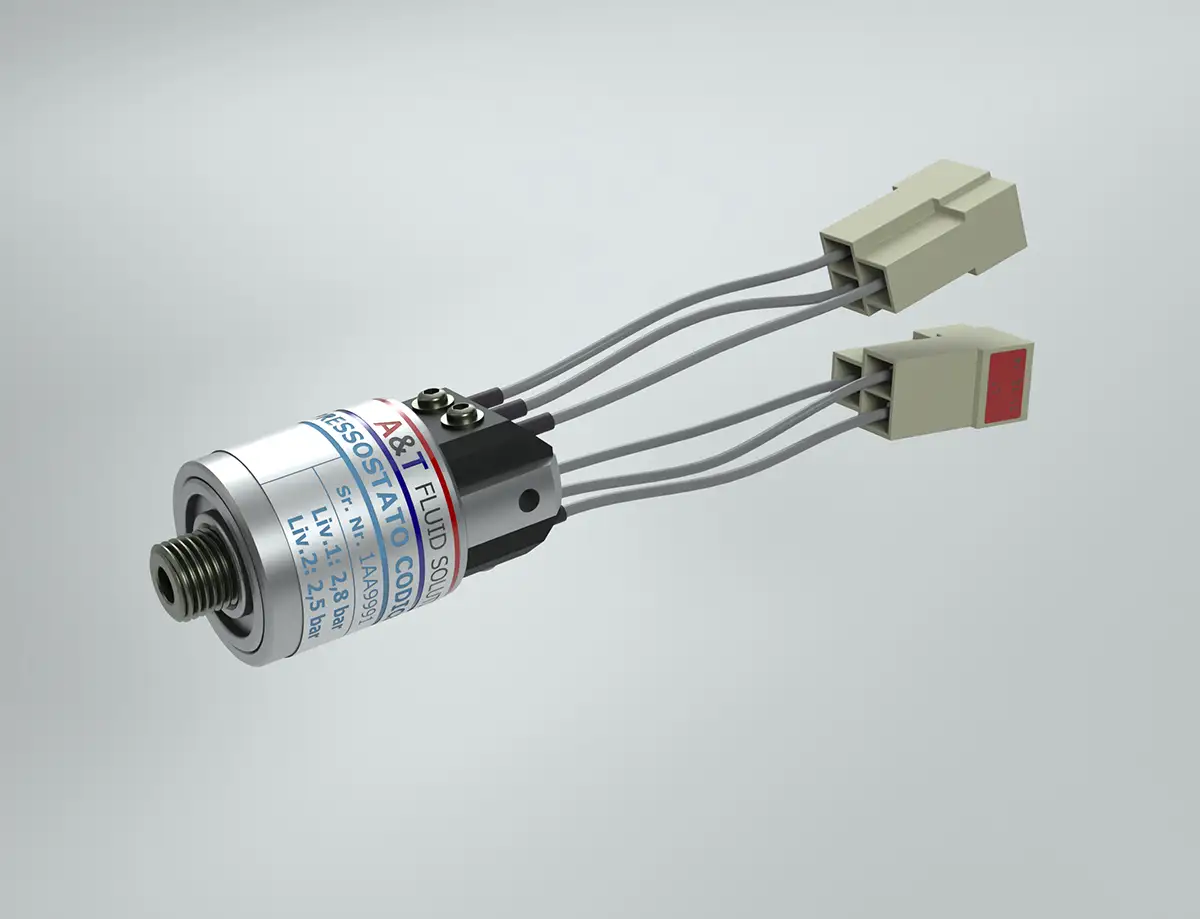
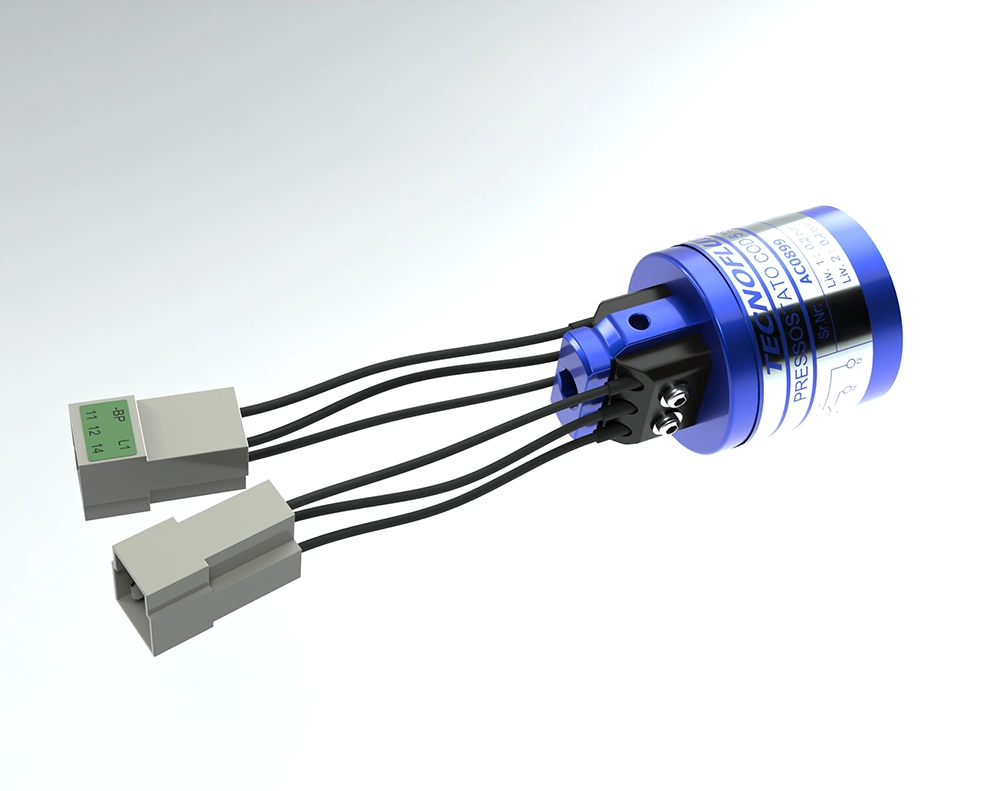
Dual-level Pressure Switch
Available in two design variants, this configuration features two distinct actuation thresholds. The typical operating logic includes a first level as a pre-alarm signal—triggering a verification procedure or notifying the operator—and a second level as the actual alarm command or interlock.
Both variants are designed for use with gases, including aggressive ones, with no internal sliding elements or seals subject to friction wear, making them particularly suitable for monitoring at very low pressures, where sensitivity and switching repeatability are critical requirements.
This configuration is also available in solutions dedicated to gas pressure monitoring offered by AT Fluid Solutions, such as dual-level pressure switches designed for monitoring technical gases.
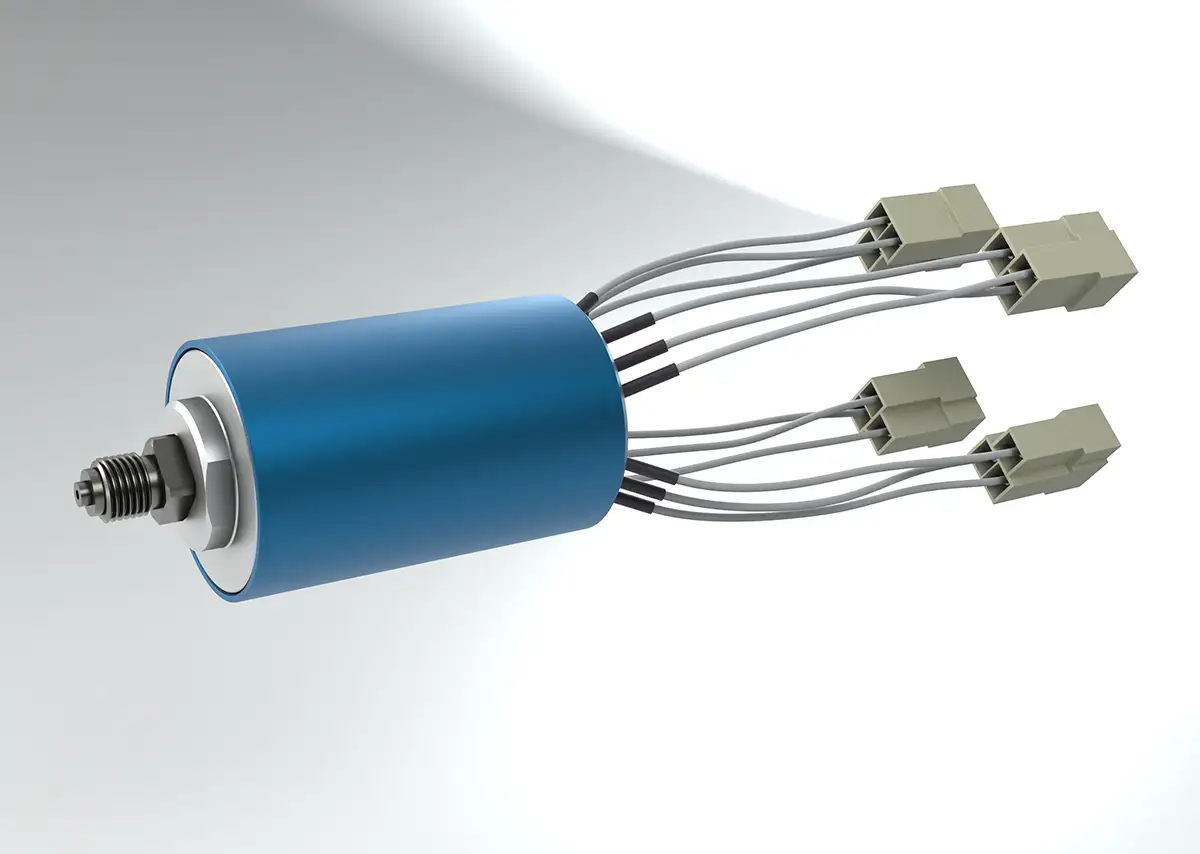
Medium-pressure Pressure Switch with Four Actuation Levels
This configuration is designed for applications requiring graded management of operating conditions: each level corresponds to a pressure threshold with an independent switching output, allowing the system response to be structured into four progressive stages—for example pre-alarm, alarm, load reduction, and emergency shutdown.
The device integrates temperature compensation, enabling reliable monitoring of density variations in sealed gas containers regardless of ambient temperature fluctuations.
This feature is particularly relevant in outdoor installations or in environments with significant temperature variations.
The advantages of using Gas Pressure Switches
In a system that handles pressurized gases, continuous and reliable monitoring of operating conditions is not an optional requirement but a fundamental component of safety and efficiency.
Gas pressure switches address concrete technical needs, which are worth examining in detail in the following points.
- Early detection of gas leaks: a pressure variation not justified by the process is almost always a sign of a leak. The pressure switch detects this condition and enables intervention before the leak reaches critical levels, with clear benefits for both safety and operational continuity.
- Protection of downstream components: valves, actuators, and other fluid power components are designed to operate within specific pressure ranges. An overpressure condition or an uncontrolled pressure drop can cause malfunction or damage. The pressure switch acts as a first level of protection, triggering load reduction or shutdown procedures before operating limits are exceeded.
- Graduated management of operating states: with multi-level configurations, it is possible to differentiate the system response to progressively abnormal pressure conditions, avoiding the economic and operational drawbacks of unnecessary sudden shutdowns.
- Compatibility with aggressive gases: thanks to a design without sliding elements and without seals subject to friction wear, these devices maintain their operating characteristics even when in contact with gases that could degrade traditional elastomer components.
- Measurement reliability independent of temperature: the integrated temperature compensation in low-pressure versions ensures that ambient temperature variations do not affect actuation values, eliminating one of the main sources of false alarms in systems subject to significant temperature fluctuations.
Where Gas Pressure Switches are used: industrial sectors and applications
The industrial applications of gas pressure switches span multiple sectors, all sharing the need to control gas pressure in closed or semi-closed systems with high safety and reliability requirements.
Among the main applications, the following can be identified:
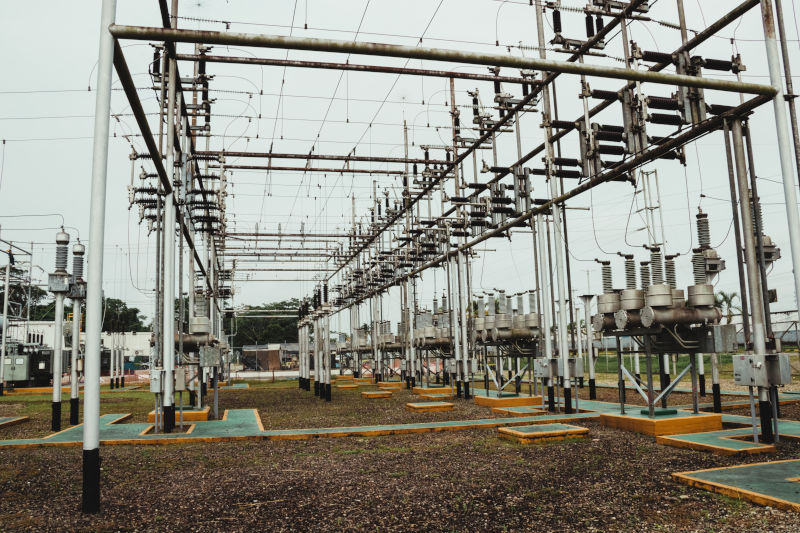
- Gas-insulated switchgear and control systems: in medium- and high-voltage electrical switchgear insulated with gas—such as SF6 or alternative mixtures—monitoring gas pressure is a critical safety function. A loss of insulating gas pressure reduces dielectric properties and can lead to serious failures. In these applications, the pressure switch acts as the first indicator of an abnormal condition, with actuation levels distinguishing between a warning state and a true alarm condition.
- Hydraulic systems with gas-oil circuits: in hydropneumatic accumulators and in gas circuits interacting with the hydraulic section of the system, gas pressure control is essential to ensure proper energy delivery and to prevent abnormal operating conditions caused by loss of charge.
- Industrial gas distribution systems: in networks distributing technical gases (nitrogen, argon, process gases), pressure control is required to verify supply pressure to end users, detect source depletion or saturation, and manage switching between redundant sources.
- Systems using aggressive or technical gases: in applications where the gas has specific chemical properties—corrosive gases, high-purity technical gases, or process mixtures—the dedicated design for gas ensures device reliability even under conditions that would rule out the use of conventional pressure switches.
Integration with other system components
A pressure switch never operates in isolation: its value within a system architecture is determined by the quality of its interface with other control system components and with actuators.
Its output—a clean electrical contact—is the simplest and most universally compatible form of signal with any control logic.
In PLC-based systems, the pressure switch directly feeds a digital input. The program logic interprets the contact status and manages the resulting actions:
- alarm activation,
- actuation of shut-off valves,
- reduction of operating parameters,
- event logging.
With multi-level actuation configurations, the PLC receives distinct signals from independent contacts, allowing it to differentiate actions based on the severity of the detected condition—without the need for additional software comparison logic.
On the actuator side, the pressure switch signal can directly control shut-off solenoid valves or bypass valves, acting on the gas circuit before the abnormal condition propagates to the rest of the system.
In the presence of SCADA supervision systems, the pressure switch can be integrated into remote monitoring architectures, contributing to predictive maintenance through the historical logging of switching events.
From a functional safety perspective, the pressure switch is often part of safety architectures as a component of an interlock circuit or as an element within a redundant protection system.
In these contexts, the simplicity and robustness of its operating principle—a mechanical contact actuated by a pressure-sensitive element—represent a clear advantage over more complex solutions that introduce additional software or electronic dependencies.
How to choose a Gas Pressure Switch: technical selection criteria
The selection of a gas pressure switch is not limited to verifying the operating pressure range. The selection criteria concern the overall set of operating conditions and integration requirements, and must be evaluated systematically to avoid costly over-specification or, worse, under-specification that compromises system reliability.
These are outlined below:
- Compatibility with the type of gas: chemical compatibility between the gas and the wetted materials is the first criterion to verify. For aggressive or special gases, it is necessary to select devices specifically designed for this category, with a construction free of sliding seals.
- Pressure range and setpoint range: the operating range of the pressure switch must include, with an adequate margin, the system’s nominal pressure values and the required actuation thresholds. A device operating at the limits of its range will have degraded switching performance and reduced service life.
- Number of required actuation levels: if the control logic requires differentiation between multiple operating states—pre-alarm, alarm, shutdown—a multi-level configuration with independent contacts is required. Using a dual-level pressure switch to manage conditions that would require four thresholds introduces compensating logic into the control software, increasing complexity and potential points of failure.
- Presence of significant temperature variations: in installations subject to wide temperature fluctuations, integrated temperature compensation is a functional requirement, not an option. Without this feature, actual actuation thresholds vary with temperature, making the system unpredictable.
- Protection rating and environmental conditions: the device’s IP rating must be suitable for the installation environment (presence of dust, humidity, chemical agents). In harsh industrial environments, insufficient protection specification is one of the most common causes of premature failure.
- Regulatory compliance: in systems subject to specific regulations—such as the PED directive for pressure equipment, ATEX regulations for potentially explosive atmospheres, or IEC standards for electrical systems—it is necessary to ensure that the selected pressure switch has the required certifications for the specific application.
For more complex requirements, such as managing multiple actuation thresholds, multi-level solutions such as four-level pressure switches can be considered.
Selecting the right pressure switch means:
- reducing operational risk,
- simplifying the control system architecture,
- and ensuring long-term reliability.
In an industrial context where system availability is a critical economic factor, investing in the correct technical selection of this component is a decision that pays off quickly.