

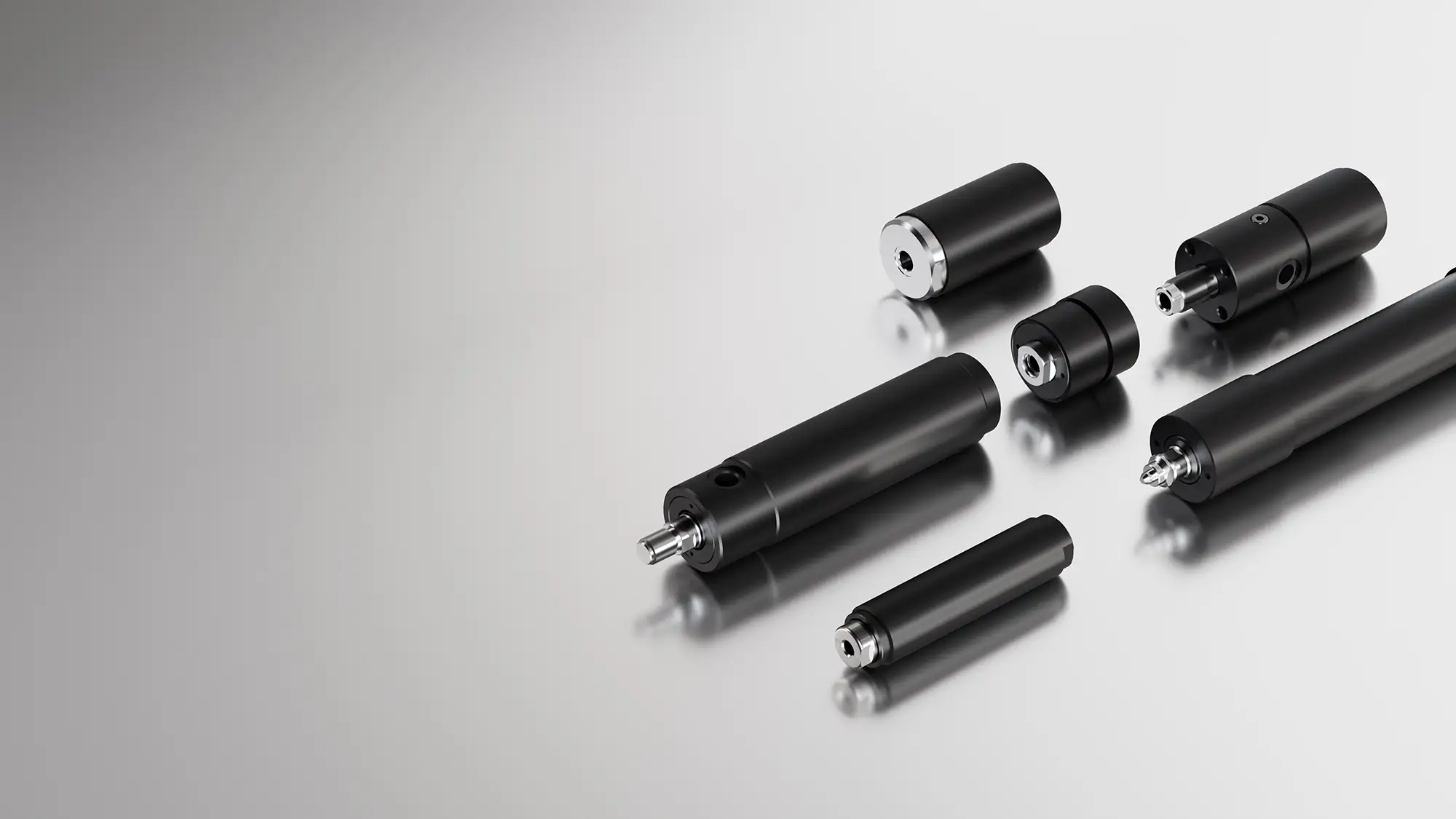
Locking Cylinders
Didn’t find what you were looking for?
Contact us and we will help you to find the most suitable solution
Contact usSpecial products
Hydraulic components customized for your every need




Locking Cylinders
Stability and Precision in Clamping Systems
Locking cylinders ensure a stable and secure hold in precision machinery and equipment.
Used in industrial and mechanical applications, they ensure the correct positioning of components during machining.
They are available in different configurations to adapt to various production needs.
What Clamping Cylinders are and how They work
A clamping cylinder is a linear hydraulic actuator — or a compound-motion actuator — that converts oil pressure into mechanical force applied directly to the workpiece or to an intermediate clamping element.
The operating principle is based on the pressurization of one or both cylinder chambers, achieved through a hydraulic power unit that supplies the circuit at pressures typically ranging between 150 and 350 bar, depending on the configuration and manufacturer.
During the clamping phase, pressurized oil pushes the piston, which acts — directly or through a system of levers, wedges, or rotating elements — on the clamping point of the workpiece.
During the unclamping phase, the pressure is reversed or released, allowing the removal of the part and the positioning of the next one.
When managed by a centralized system, this sequence can be integrated into the automatic cycle of the machine tool, reducing downtime between operations.
A key technical aspect concerns hydraulic sealing: in systems where the fixture is physically separated from the power unit after clamping — so-called hydrostatic systems — pressure stability over time is ensured by seat valves and high-reliability seals.
In these cases, a pressure control cylinder is often included, capable of detecting drops greater than 20% and sending a signal to the control system before the machine resumes machining.
Main types
The market for hydraulic clamping systems for machine tools offers a wide range of configurations, each designed to meet specific geometric and functional requirements.
Understanding the differences among the main types is the first step in selecting the most suitable component for the application.
Single-Acting and Double-Acting Cylinders
The most fundamental distinction concerns the number of active chambers.
In single-acting cylinders, hydraulic pressure acts in only one direction — typically during the clamping phase — while return is achieved by a spring.
In double-acting cylinders, both phases are hydraulically controlled, ensuring precise unclamping forces and faster cycles, particularly useful in automated fixtures.
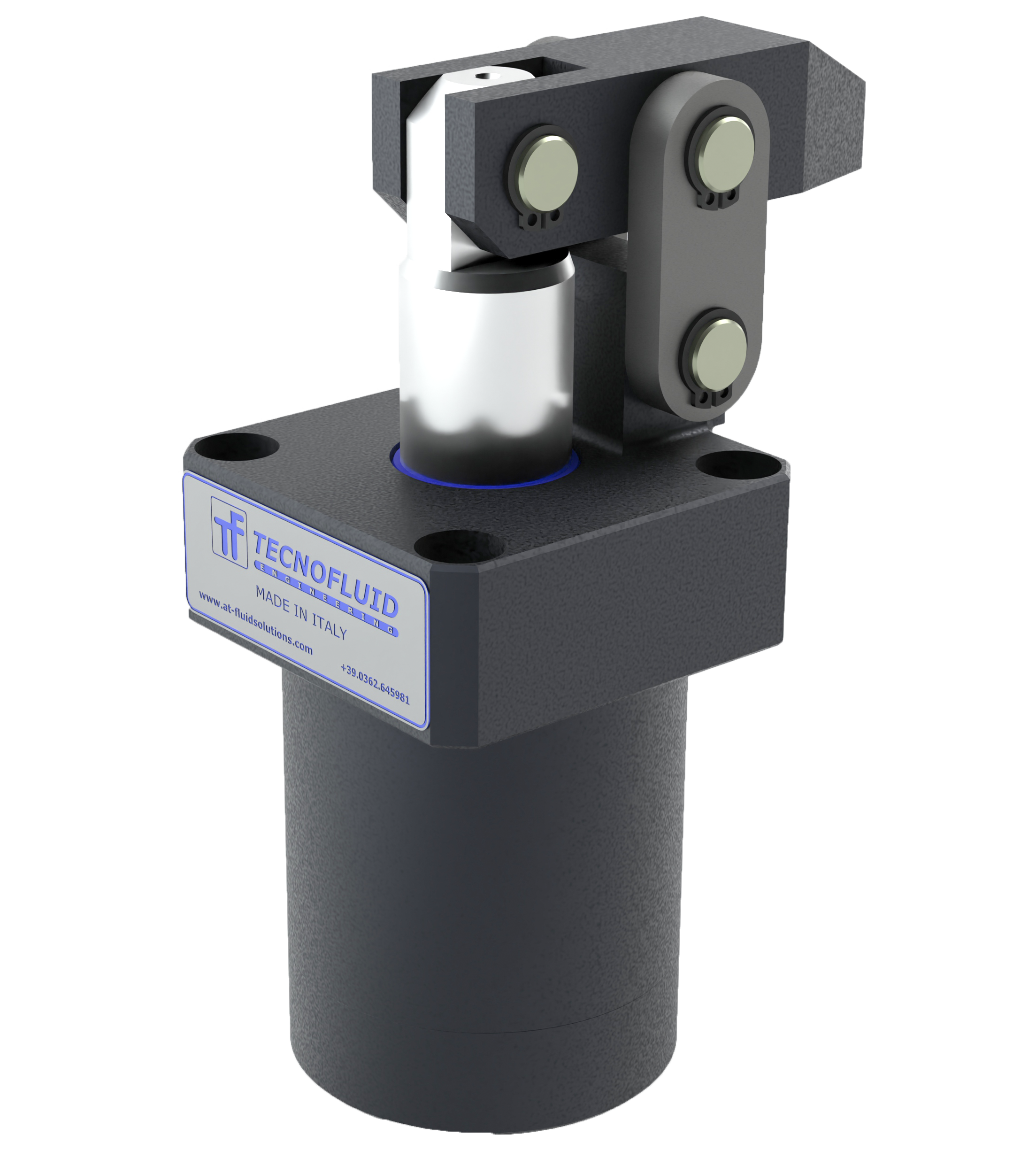
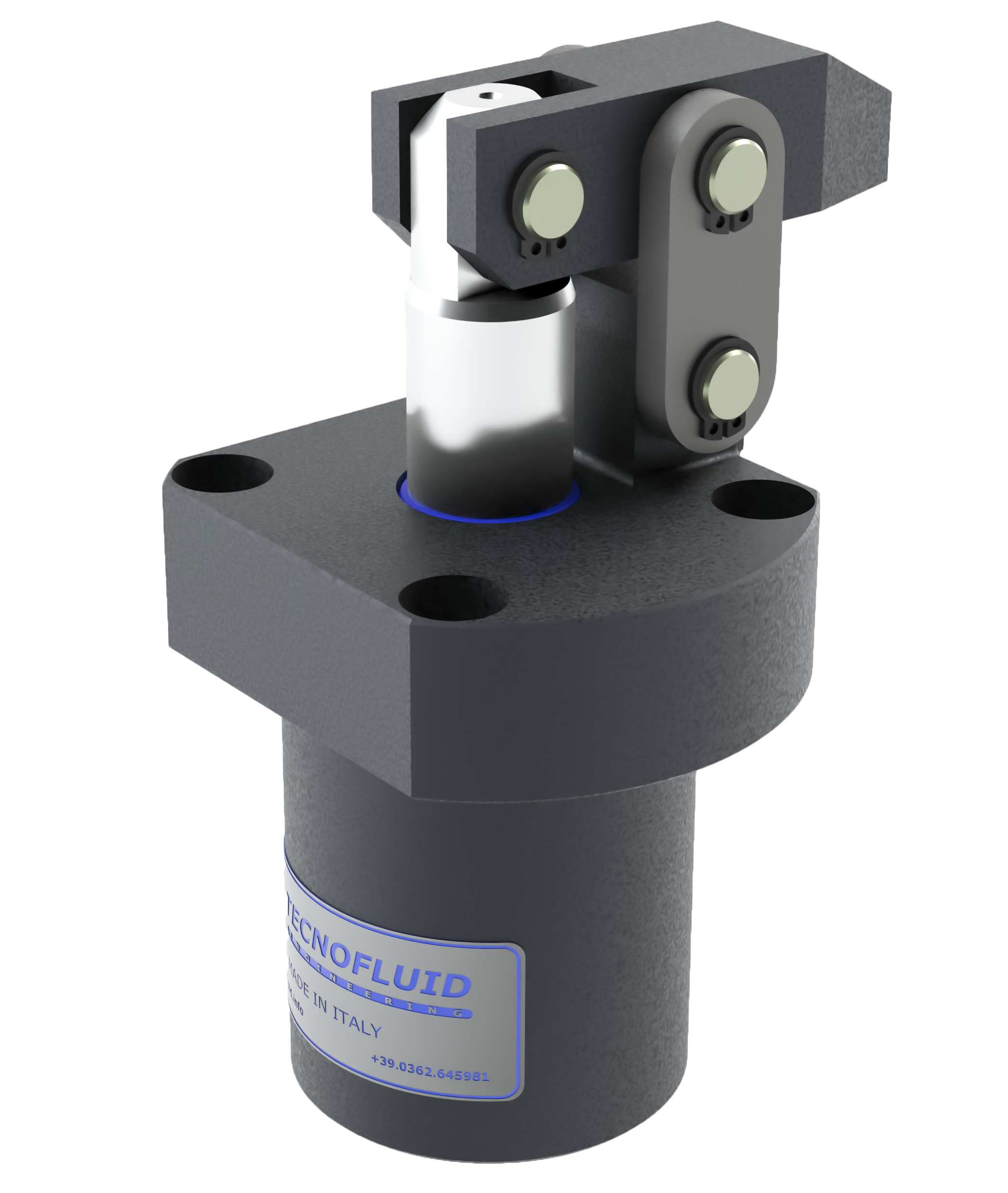
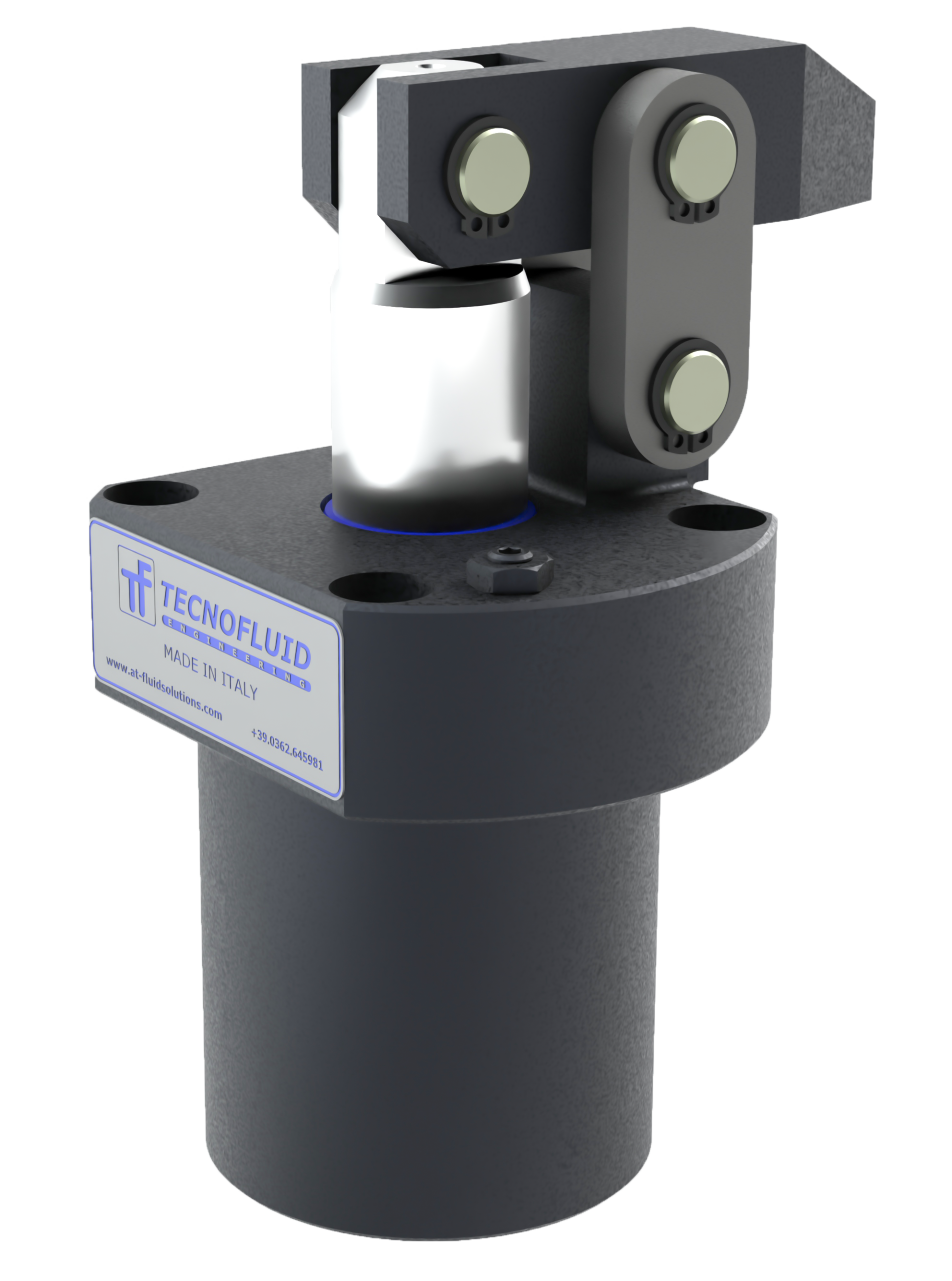
Rotary Cylinders (or Swing Clamps)
These cylinders integrate a rotation of the clamping arm before downward movement, combining advancement and clamping functions into a single component.
They are among the most widely used solutions in fixtures for CNC machining centers, because they allow the loading area to be completely clear during workpiece positioning and automatically return to the clamping position once the cycle starts.
Standard versions and high-pressure (HPC) versions are available, the latter capable of generating significantly higher clamping forces with the same overall dimensions.
Compact Lever Cylinders
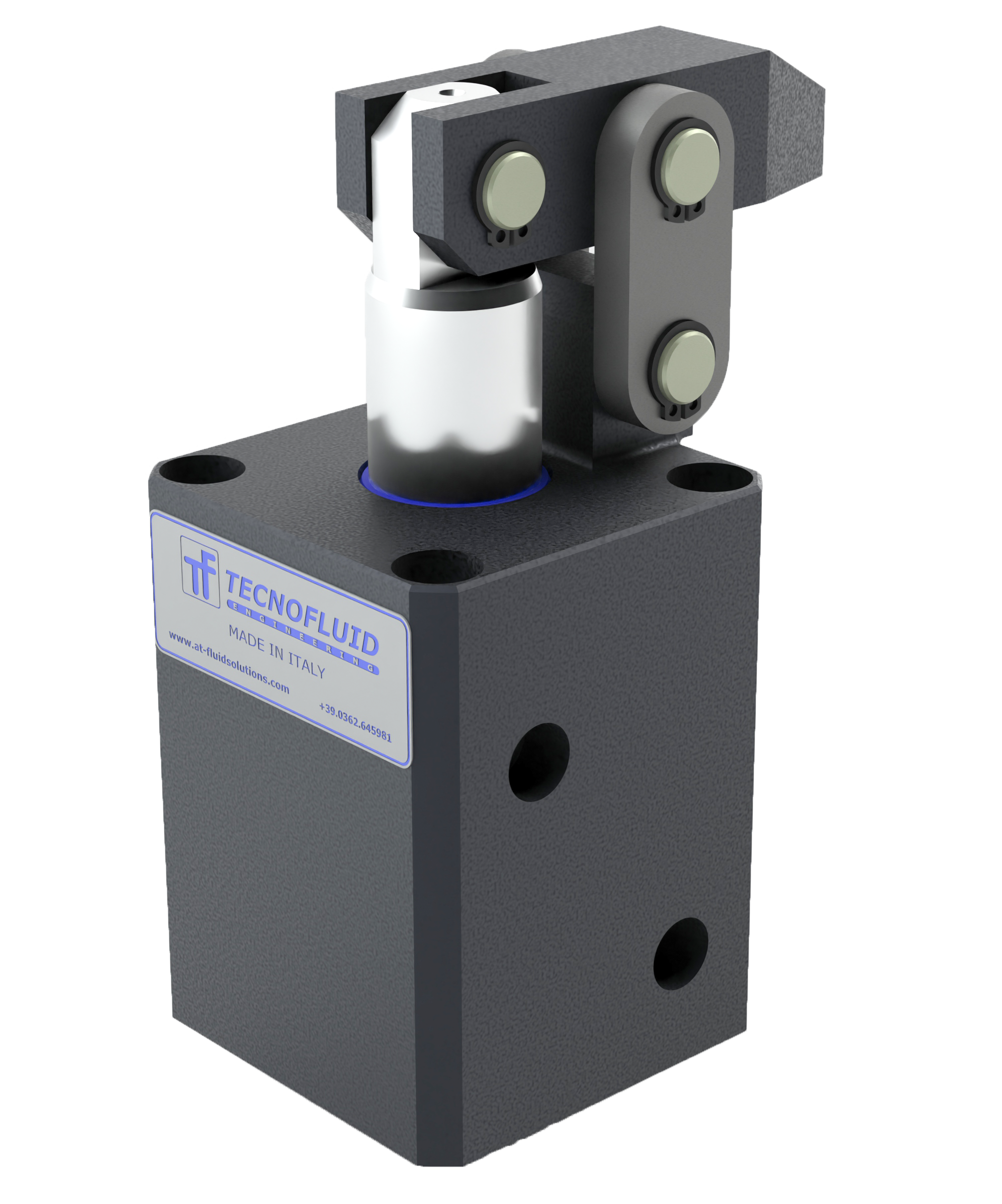
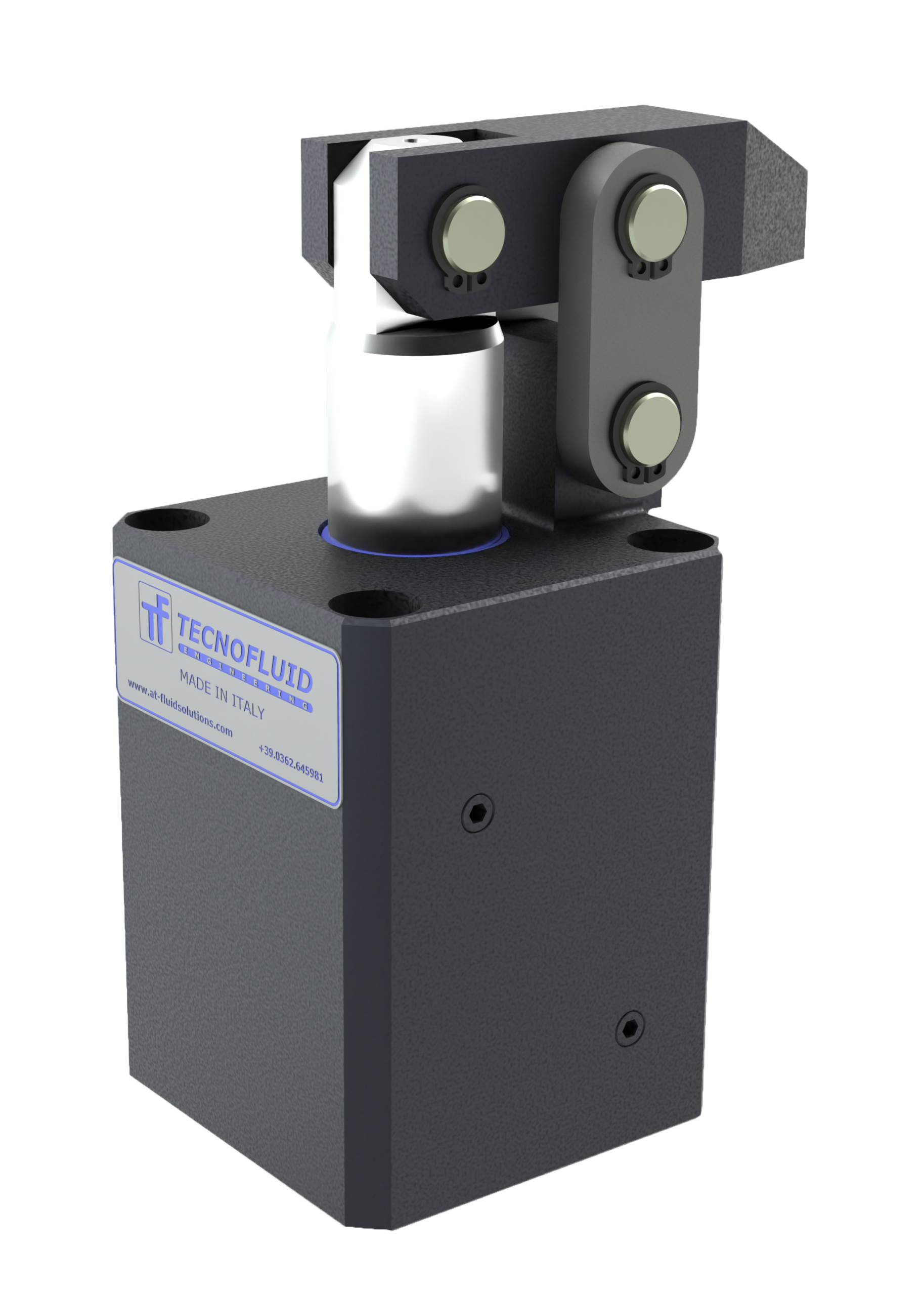
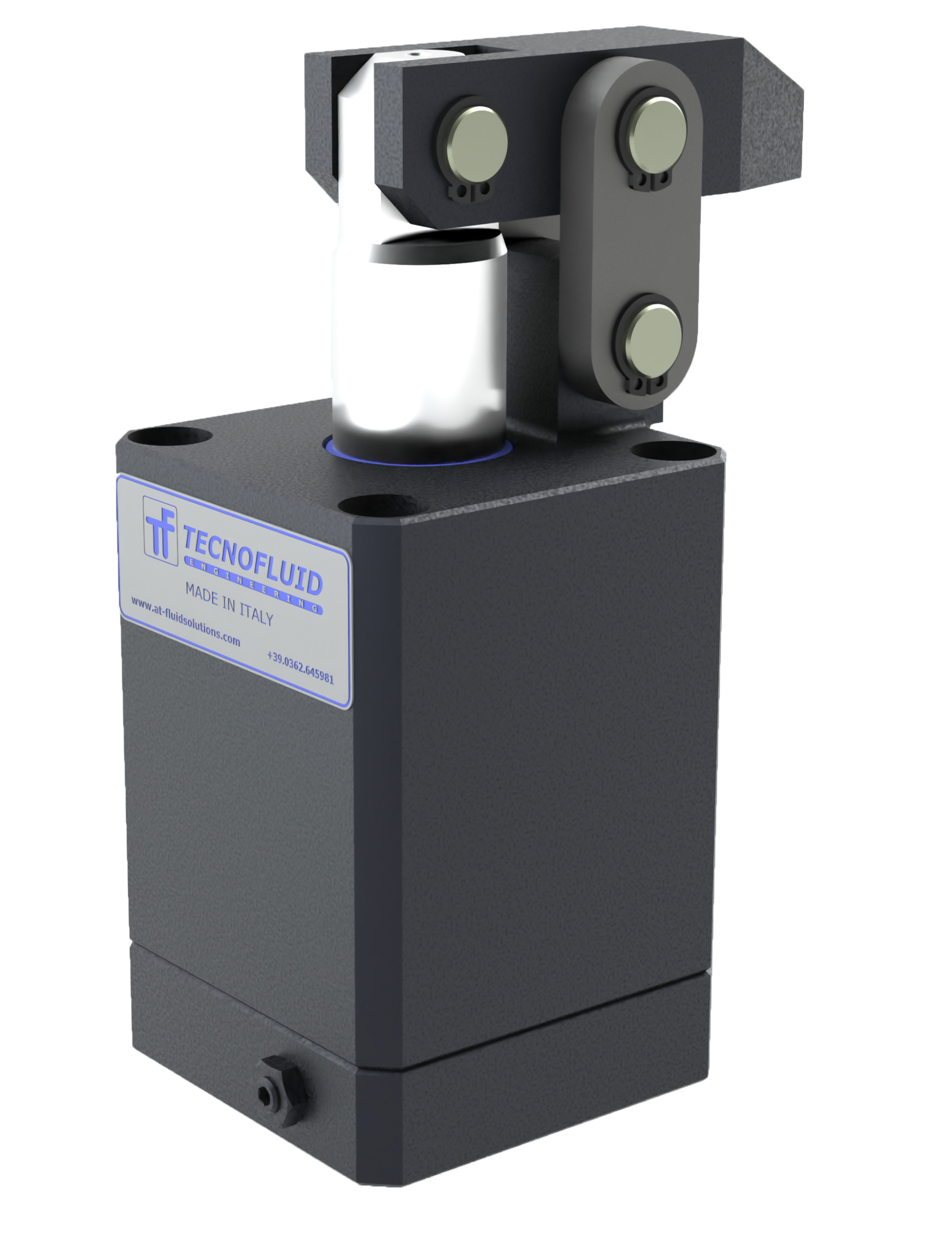
Compact clamping elements are reduced-size cylinders that transmit piston force through a lever.
Thanks to operating pressures that can reach 250 bar, they are able to generate clamping forces exceeding 10 kN even in very limited spaces.
The relatively short stroke allows the clamping area to be completely disengaged during loading and unloading operations, simplifying part handling.
They can be equipped with position monitoring — in the clamped position, the unclamped position, or both — via inductive proximity sensors or pneumatic nozzles, also enabling workpiece presence detection.
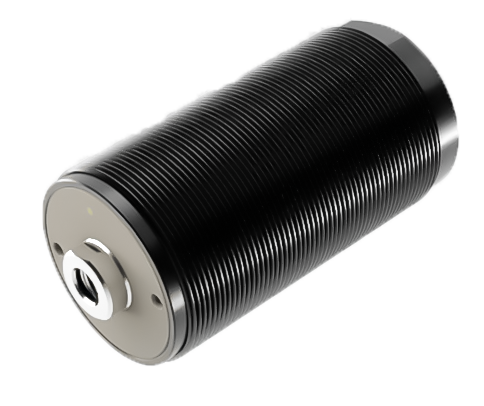
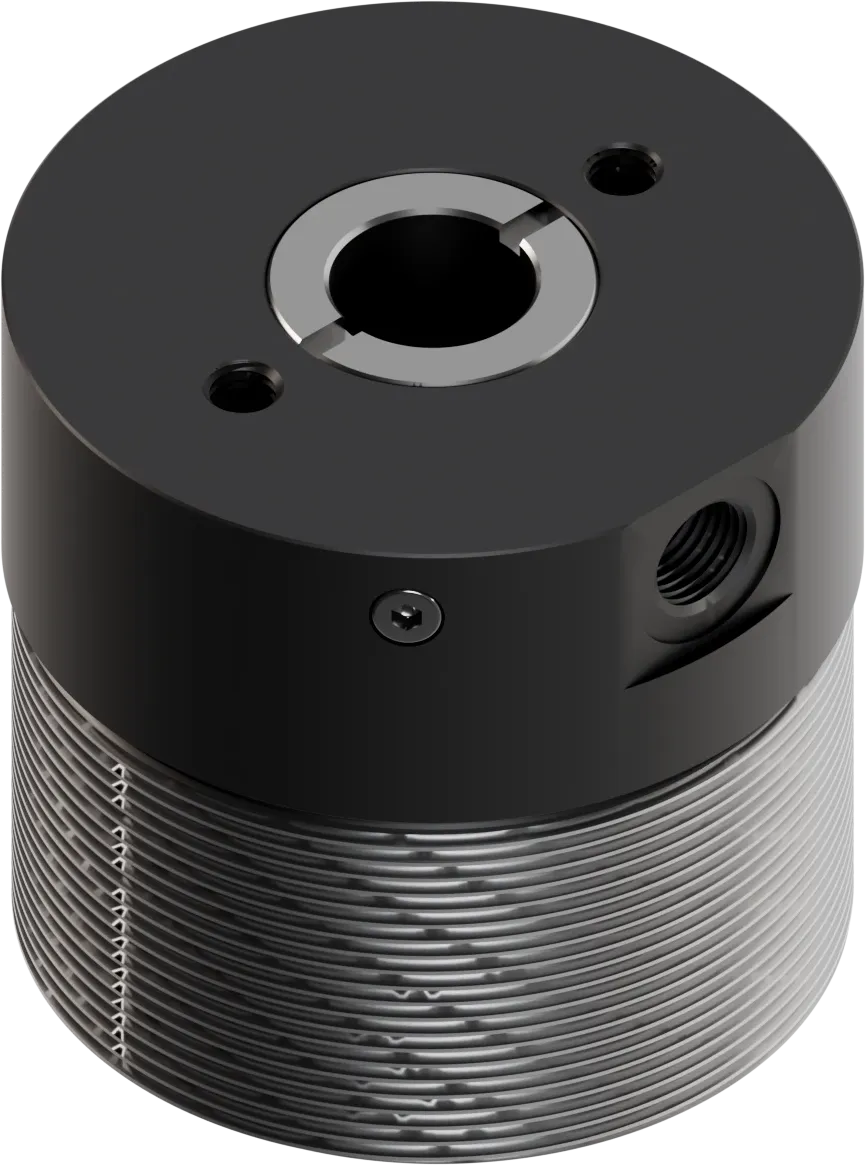
Threaded Cylinders
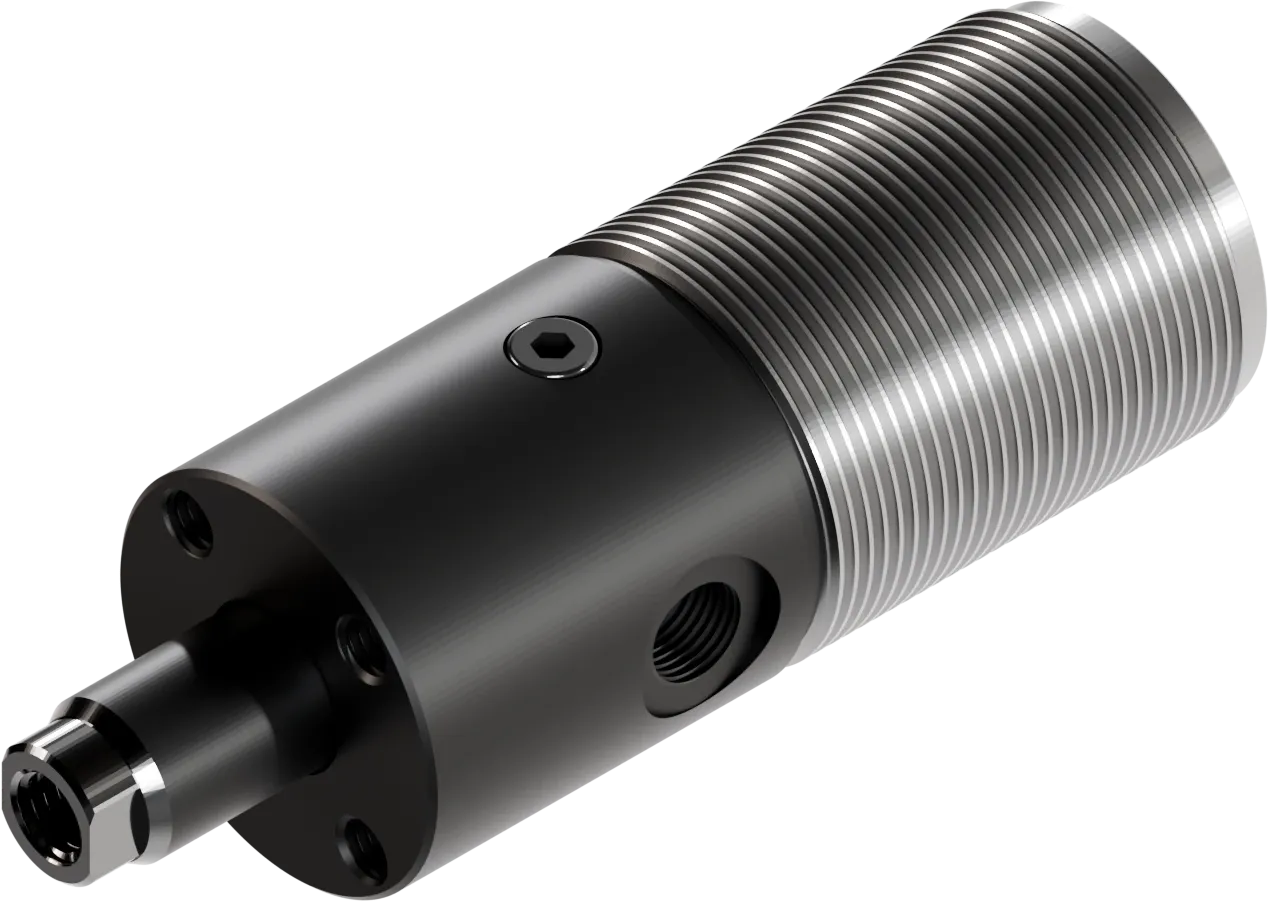
These cylinders feature a threaded body, designed for direct integration into the fixture body by screwing.
The compact solution and absence of additional fastening elements make them ideal when available space is particularly limited or when a clean, protrusion-free design is required.
Pull-Type and Push-Type Cylinders
This category includes cylinders that apply tensile force (downward, toward the inside of the fixture) or compressive force (upward, toward the workpiece).
Pull-type cylinders are often used for clamping through holes in the workpiece, while push-type cylinders act directly on the upper surface.
Both types are available in single-acting and double-acting versions.
Self-Aligning and Self-Centering Cylinders
In high-precision clamping systems, dimensional variations of parts or positioning tolerances can cause uneven contact issues.
Self-aligning cylinders automatically compensate for small angular or parallelism variations, while self-centering cylinders — equipped with expandable cone systems — locate the workpiece relative to a reference bore, ensuring repeatable positioning cycle after cycle.
Work Supports (Anti-Vibration Cylinders)
Work supports, also called anti-vibration supports, do not exert clamping force in the strict sense but serve to support and stabilize the weaker sections of the workpiece — thin walls, overhangs, or low-rigidity sections — during machining.
Some models feature a self-locking mechanical wedge system that maintains the support position even in the absence of hydraulic pressure.
This feature is essential in hydrostatic systems, where the connection to the power unit is interrupted during machining.
The advantages of Hydraulic Clamping Systems in industrial fixtures
Compared to manual or purely mechanical clamping solutions, hydraulic clamping systems offer a number of concrete advantages that translate into measurable improvements in productivity and process quality.
The clamping force is constant and does not depend on the operator: each activation of the circuit generates exactly the same pressure on the clamping element, eliminating the variations typical of manual tightening.
This directly improves machining repeatability and the dimensional tolerances of produced parts.
Clamping and unclamping times are measured in seconds, compared to manual operations that may take minutes, especially in fixtures with many clamping points.
In high-volume production lines, these time savings accumulate significantly.
Other key advantages include:
- Integration with machine controls: hydraulic clamping systems can be operated via solenoid valves connected to the machine’s PLC, making clamping an integral part of the automatic CNC cycle.
- Process monitoring: through position sensors and pressure switches, it is possible to verify in real time that all cylinders have reached the clamping position and that the pressure is correct before authorizing machining start.
- Uniform force across multiple points: a single power unit can supply dozens of cylinders in parallel, ensuring the same pressure — and therefore the same force — at all clamping points simultaneously.
- Resistance to the working environment: cylinders for machine tool applications are designed to operate in the presence of coolants, oil mist, and chips, with appropriate protection on the rod, body, and connections.
Industries and typical Applications
Clamping cylinders are primarily used in the metalworking industry, where material removal processes require precise and stable fixation of the workpiece throughout the operation.
The sectors that rely most heavily on this technology include automotive and mechanical component manufacturing, aerospace, and mold production, where production volumes and required tolerances make automated clamping essential.
Within these environments, hydraulic clamping cylinders are used in various operational contexts:
- fixtures for vertical and horizontal machining centers,
- fixtures for 5-axis machining,
- clamping pallets for flexible manufacturing systems,
- clamping tables for welding and assembly.
In all these cases, the common denominator is the need to position the workpiece accurately and maintain that position with constant and controlled forces throughout the entire cycle.
How to choose the most suitable Clamping Cylinder
Selecting the correct cylinder depends on a combined evaluation of technical and operational factors.
There is no universal answer, but there are precise parameters to analyze before proceeding with specification.
The first element to define is the required clamping force, which depends on:
- the cutting forces generated by the tool,
- the number of available clamping points,
- and the overall rigidity of the workpiece.
It is good practice to work with a safety margin above the theoretically minimum required force.
It is equally important to assess the available space in the fixture: compact and threaded cylinders address critical space constraints, while rotary cylinders require greater clearance height but offer advantages during loading.
The workpiece geometry and tool paths directly influence which types can actually be used.
Additional relevant variables to consider include:
- Cycle type (manual, semi-automatic, fully automated) and compatibility with existing control systems.
- Monitoring requirements: if the process requires position or pressure control, cylinders prepared for sensors must be specified or monitoring elements integrated into the hydraulic circuit.
- Compatibility with hydrostatic systems: if the fixture must be separated from the power unit during machining, all circuit components must be suitable for static pressure retention.
- Environmental conditions: temperature, presence of aggressive coolants, and intensive duty cycles influence the choice of materials and seals.
A final consideration concerns the availability of special or customized versions: many manufacturers in the sector — as demonstrated by the offering available on this page — produce cylinders built to customer specifications, adapting stroke, hydraulic connections, lever type, and sensor configuration to project requirements.
In the presence of complex fixtures or non-standard applications, consultation with a specialized technician remains the most reliable way to achieve the correct selection.
Special products
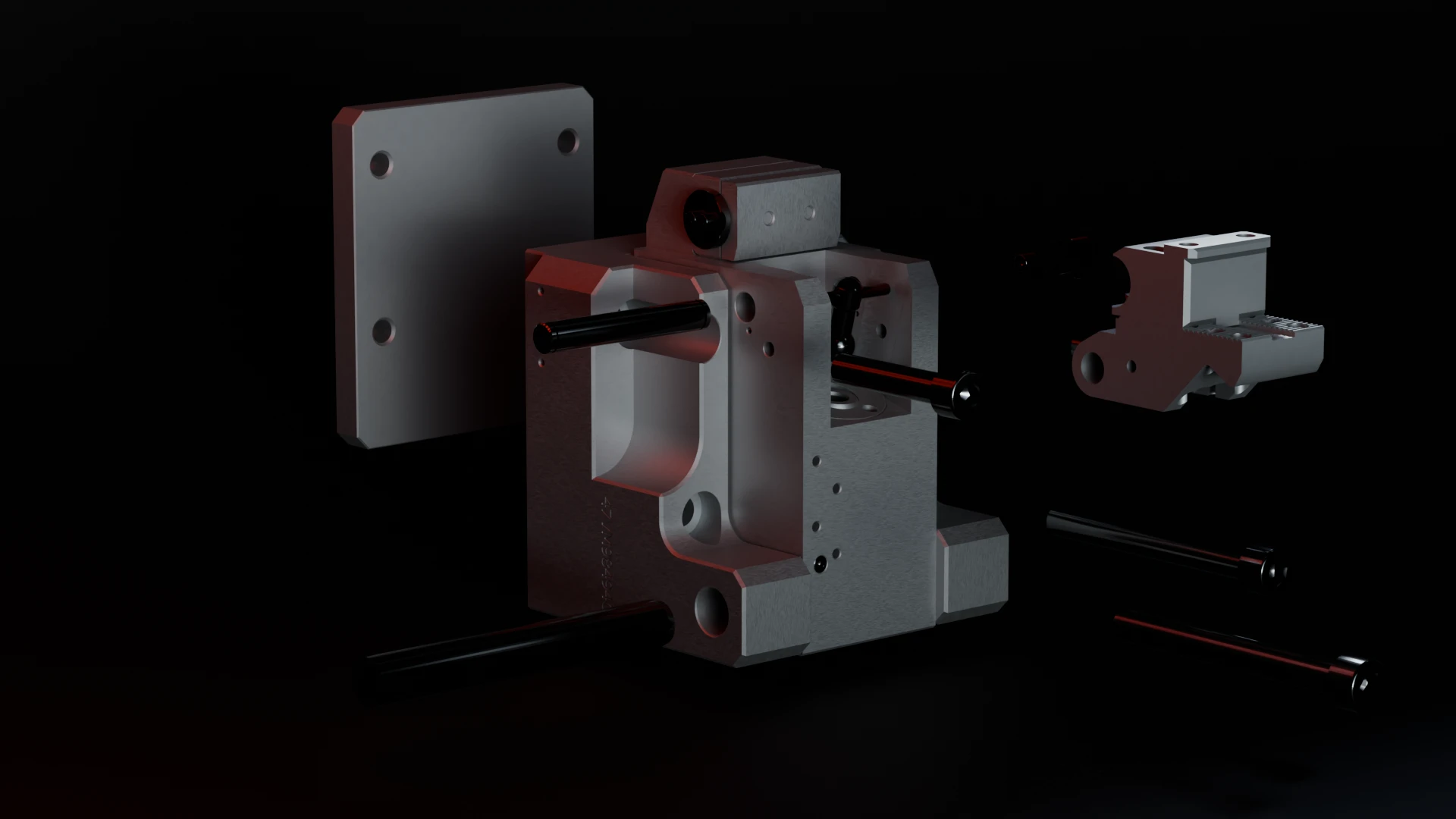
tailor-made
A&T stands out for its ability to offer custom-made products, designed to meet every specific need in the field of pneumatic and hydraulic solutions. We guarantee precision, quality, and innovation in every detail to ensure maximum efficiency and reliability.